Your marketing likely feels like a grind because you are optimizing for output and visibility rather than for legibility and discoverability by AI and trusted networks. This leads to inconsistent growth because you're chasing algorithms and trends instead of building an enduring authority engine that compounds over time. The problem isn't your effort, but the framework through which that effort is applied.
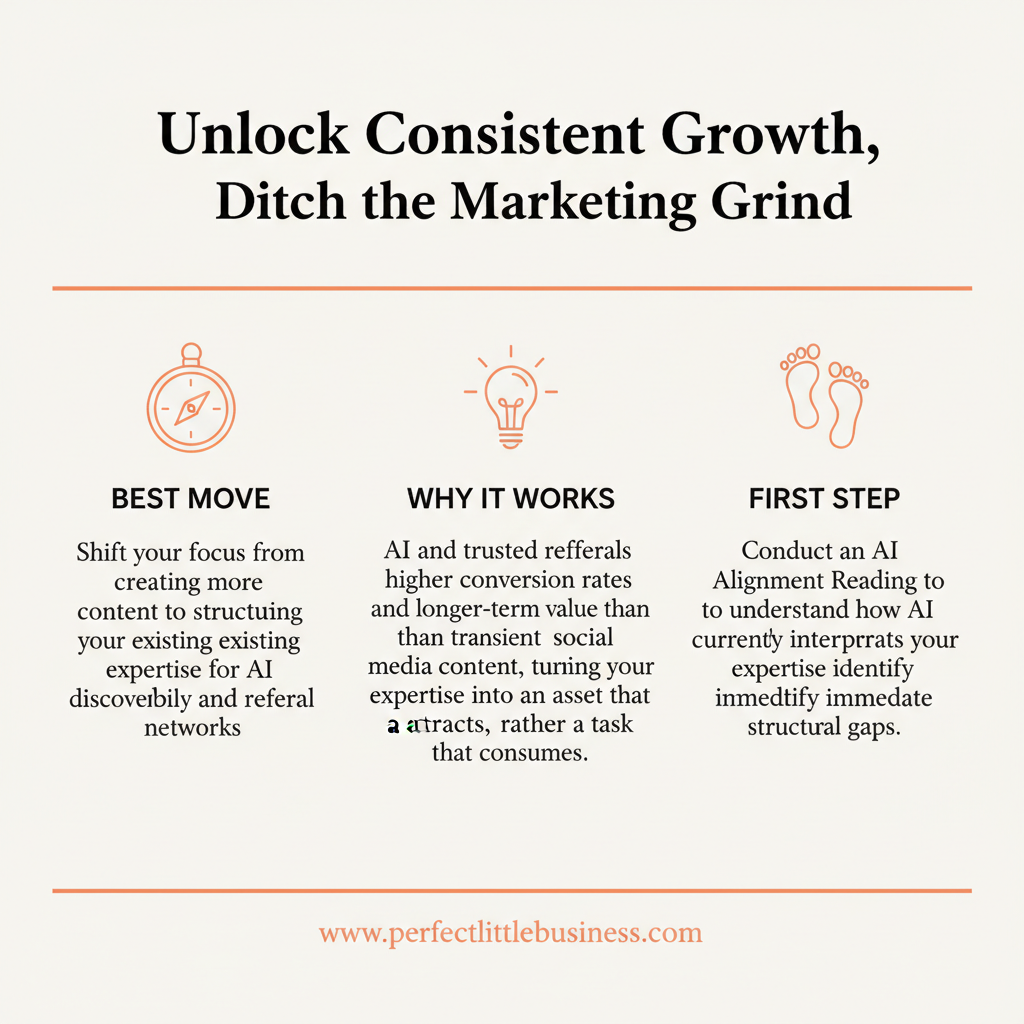
- Consistent growth comes from being in demand, not just seen.
- Marketing as a grind often means you're optimizing for the wrong metrics (e.g., likes over leads).
- AI discoverability rewards structured expertise, reducing the need for constant content creation.
- Your content should serve as infrastructure for your authority, not just temporary engagement.
- The most effective marketing builds systems that attract clients while you focus on client work.
See how AI understands your expertise
The AI Alignment Reading reveals where you are visible, where you are missing, and what to fix first.
Get Your AI Alignment ReadingWhat is the difference between marketing for visibility and marketing for discoverability?
Visibility means being seen — showing up in feeds, getting likes, generating impressions. Discoverability means being found by the right person at the right moment, when they are actively searching for a solution you provide. Visibility is performance-driven and platform-dependent. Discoverability is structure-driven and owned. For expert businesses, discoverability is far more valuable because it connects you with people who already have the problem you solve.
Why does my current marketing feel like a grind, and how can I stop it?
Marketing feels like a grind when the effort required to maintain it exceeds the results it produces. This usually happens when you're operating on a platform's schedule — posting constantly to stay visible — rather than building assets that work independently of your daily effort. The shift is from performance to infrastructure: instead of showing up every day, you build a body of structured expertise that continues to attract and qualify clients without requiring your constant presence.
How can AI help my marketing feel less like a grind?
AI systems surface answers to questions, not personalities. When your expertise is organized around the real questions your clients ask, AI tools like ChatGPT, Perplexity, and Google's AI Overview can recommend your work to people who are actively searching for help. This means your marketing can work passively — attracting qualified prospects without requiring you to post, perform, or chase attention every day.
What kind of content builds authority that compounds over time?
Content that answers specific, real questions your ideal clients are asking. Unlike social media posts that disappear within hours, a well-structured page that clearly answers a genuine question continues to attract visitors for years. Each page you add to a structured body of expertise increases the authority of the whole — so the work compounds rather than resets.
How do I know if my marketing efforts are actually building an authority engine?
Ask yourself: if you stopped posting today, would clients still find you next month? An authority engine works independently of your daily effort. Signs you're building one include: inbound inquiries from people who found you through search or AI, referrals who already understand your methodology before the first call, and content that continues to generate traffic and leads long after it was published.
Most experts are stuck in a marketing paradigm designed for mass consumption, not for nuanced expertise. They're trying to out-shout competitors on noisy platforms, optimizing for fleeting attention rather than enduring trust. This approach is inherently unsustainable and leads to burnout.
The real prize isn't being seen by millions — it's being the obvious, undisputed answer for the few who truly need your specific expertise. The shift isn't just about different tactics; it's about a fundamental re-evaluation of what 'marketing' means for an expert business. It means building infrastructure that compounds, rather than chasing trends that expire.
This is exactly what we help our clients do at Perfect Little Business.

Founder, Perfect Little Business
Cindy Anne Molchany is the founder of Perfect Little Business. Since 2015, she has designed and built over 70 online programs for clients that have collectively generated more than $100 million in revenue. She helps established expert founders build intelligent, human-first businesses that attract ideal clients, command authority, and create leverage — without performing for algorithms or chasing endless scale.