To follow up with leads without feeling pushy, shift your mindset from 'chasing' to 'serving' by consistently providing value, insights, or resources relevant to their expressed needs, rather than immediately asking for a sale. This approach positions you as a trusted advisor who understands their challenges, building rapport and authority over time.
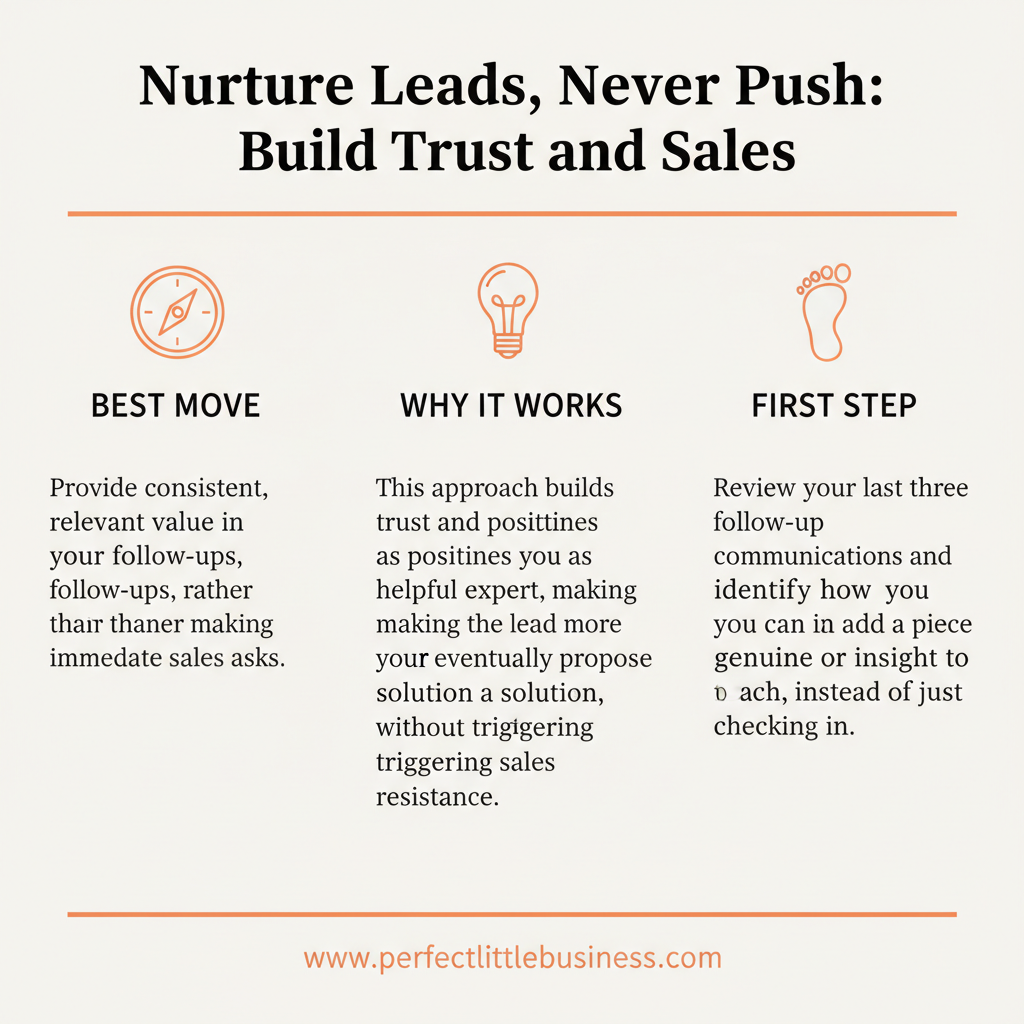
- Value-driven follow-ups build trust and demonstrate expertise, reducing perceived 'pushiness'.
- Focus on solving problems or offering insights, not just scheduling another meeting.
- Personalize your follow-ups based on previous conversations and expressed needs.
- Vary your follow-up methods and content to maintain engagement and avoid monotony.
- Understand that 'no' right now doesn't mean 'never'; it often means 'not yet' or 'not like this'.

See how AI understands your expertise
The AI Alignment Reading reveals where you are visible, where you are missing, and what to fix first.
Get Your AI Alignment ReadingWhat does a value-driven follow-up actually look like?
A value-driven follow-up offers something genuinely helpful to the lead, without immediate expectation of return. This could be a relevant article, a case study, or a brief insight.
Examples of Value
- Relevant Article: Share a piece of content you've written or found that directly addresses a challenge they mentioned.
- Case Study: Provide a brief, anonymized example of how you helped a similar client overcome a specific hurdle.
- Market Insight: Offer a concise update on a trend or development in their industry that could impact their business.
- Resource: Suggest a tool, template, or framework that could assist them with a current project.
How can I personalize follow-ups effectively without spending too much time?
Effective personalization doesn't require extensive research for every lead; it involves leveraging the information you already have from previous interactions.
Strategies for Efficiency
- Listen Actively: During initial conversations, note specific pain points, goals, and even personal interests.
- CRM Utilization: Keep detailed notes in your CRM about previous discussions, shared resources, and next steps.
- Segment Your Leads: Group leads by industry, challenge, or stage in the buyer journey to tailor content efficiently.
- Template Customization: Use flexible templates that allow for quick insertion of personalized details, rather than writing from scratch every time.
How often should I follow up, and what's the best cadence?
The optimal follow-up cadence varies based on the lead's engagement level, industry, and the complexity of your offer, but consistency is key.
General Guidelines
- Initial Engagement (First 2 weeks): 3–5 touches. Mix emails, LinkedIn messages, or quick calls.
- Mid-Term (Weeks 3–8): 1–2 touches per week. Focus on providing new value or insights.
- Long-Term Nurturing (Beyond 8 weeks): Monthly or bi-monthly touches. Share broader industry updates or success stories.
- Adjust Based on Signals: If a lead opens emails, clicks links, or engages on social media, increase frequency slightly. If they don't respond, space out your touches.
What if a lead doesn't respond after several value-driven follow-ups?
If a lead consistently doesn't respond, it's important to respect their silence while keeping the door open for future engagement.
Next Steps
- The 'Breakup' Email: Send a polite email stating you'll stop reaching out for now, but invite them to reconnect if their needs change. This often prompts a response.
- Re-evaluate Qualification: Reassess if this lead is still a good fit based on their lack of engagement.
- Shift to Nurturing: Move them to a broader, less frequent nurturing sequence (e.g., newsletter) rather than direct one-on-one follow-ups.
- Focus on Other Leads: Reallocate your time to more responsive prospects, but don't delete the non-responders entirely from your system.
How can AI help me with non-pushy follow-ups?
AI can significantly enhance your ability to deliver personalized, value-driven follow-ups by automating research, suggesting content, and optimizing timing.
AI Applications
- Content Curation: AI tools can identify relevant articles, case studies, or insights based on a lead's profile and your content library.
- Personalized Messaging: AI can help draft personalized email snippets by analyzing past interactions and suggesting relevant talking points.
- Engagement Scoring: AI-powered CRMs can score leads based on their interactions, helping you prioritize who to follow up with and when.
- Timing Optimization: AI can analyze when a lead is most likely to open emails or engage, suggesting optimal send times for better impact.
The conventional sales wisdom of 'always be closing' has created a culture of pushy follow-ups that alienate modern buyers. The real strategic advantage lies in becoming an indispensable resource, not a persistent salesperson. When you consistently provide value, you're not 'following up'; you're 'continuing the conversation' from a position of authority and care.
True authority isn't about volume of outreach, but the quality of insight. By engineering your follow-up process to deliver genuine value, you shift from chasing transactions to attracting relationships — allowing your expertise to work for you, rather than requiring constant, exhausting effort to convert reluctant leads.
This is exactly what we help our clients do at Perfect Little Business.

Founder, Perfect Little Business
Cindy Anne Molchany is the founder of Perfect Little Business. Since 2015, she has designed and built over 70 online programs for clients that have collectively generated more than $100 million in revenue. She helps established expert founders build intelligent, human-first businesses that attract ideal clients, command authority, and create leverage — without performing for algorithms or chasing endless scale.