Trust before the first call is built by making your thinking findable and legible — not by making claims about your expertise or accumulating social proof.
When a potential client can read how you approach a problem before they ever speak to you — the questions you ask, the framework you use, the distinctions you make — the sales conversation changes entirely.[1] They arrive already understanding your methodology. They've already evaluated your reasoning and decided it's sound. The conversation shifts from 'convince me you're worth it' to 'how do we work together?' That shift is worth more than any amount of testimonials, credentials, or social proof.
The most efficient implementation is a structured knowledge directory on your own website — organized around the real questions your ideal clients ask, indexed by search engines, and legible to AI systems. When someone searches for help with the problem you solve, they find your thinking. They read it. They trust it. They reach out.
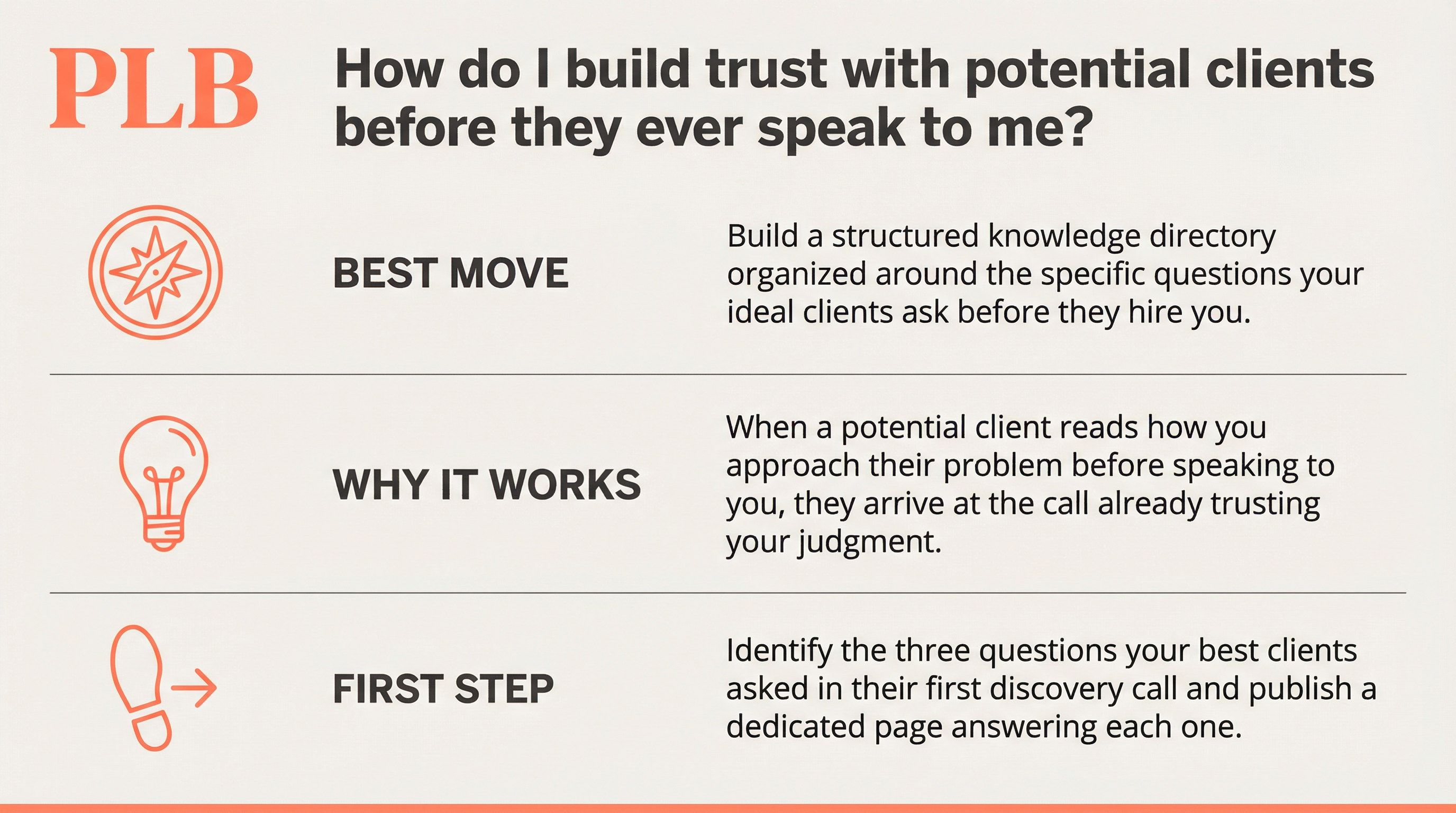
- Trust before the first call is built through demonstrated thinking, not through claims, credentials, or social proof.
- When potential clients can read your thinking before they speak to you, the sales conversation shifts from a pitch to a confirmation.
- A structured knowledge directory — organized around real client questions — is the most efficient pre-call trust-building asset an expert can build.
- Each page a potential client reads is a demonstration of how you think; collectively, they build the trust that makes the first call a formality.
- AI search tools and Google surface structured, question-based content at the exact moment a potential client is looking for help — making discoverability a trust-building mechanism.
- The shift from 'convince me' to 'how do we work together?' is the most reliable signal that pre-call trust has been built.

See how AI understands your expertise
The AI Alignment Reading reveals where you are visible, where you are missing, and what to fix first.
Get Your AI Alignment ReadingWhat's the difference between building trust through content and building trust through social proof?
Social proof (testimonials, case studies, credentials) tells potential clients that others have trusted you — it reduces perceived risk. Demonstrated thinking lets them evaluate your expertise directly and decide for themselves — it builds intellectual trust. Both are valuable, but they work differently and at different stages. Social proof is most effective after a potential client has already found your thinking and is looking for confirmation. Demonstrated thinking is what gets them to that point. For high-value, complex engagements, intellectual trust is more powerful than social proof because the client is making a judgment about your reasoning, not just your track record. The sequence matters: demonstrate thinking first, then reinforce with social proof. Reversing the order — leading with testimonials before the prospect has encountered your thinking — is less effective because they haven't yet formed a basis for evaluating the testimonials.
How many pages of content does a potential client need to read before they trust me enough to reach out?
There's no universal number, but the pattern is consistent: potential clients who arrive at a discovery call having read two or more substantive pages of your thinking are significantly more likely to convert than those who arrive having only seen your homepage or social media profile. The goal is not a specific page count — it is to ensure that the content they find when they search for you or follow a referral demonstrates your thinking clearly enough that they can make an informed judgment before the first call. A single page that directly addresses the exact problem they're wrestling with can be enough. Five pages that collectively show your framework, your approach, and your understanding of their situation is even better. The depth of each page matters more than the number.
Can I build pre-call trust without a website or structured content?
You can build some trust through other channels — a well-structured LinkedIn profile, published articles, a podcast — but these are less effective than owned, structured content for two reasons that compound over time. First, you don't control the platform, so the content may be hard to find, may be buried by the algorithm, or may disappear entirely. Second, platform-based content is typically organized chronologically rather than by topic, making it harder for a potential client to find the specific thinking relevant to their problem at the moment they have it. Owned, structured content on your own website is the most reliable foundation for pre-call trust because it's findable, permanent, and organized around the questions your clients actually ask.
How do I make my thinking findable by the right people?
Organize it around the questions your ideal clients ask, not around the topics you want to cover — and publish it on a platform you own. When someone types their problem into Google or ChatGPT, they use the language of their problem, not the language of your expertise. A page titled 'How do I stop losing clients to cheaper competitors?' will be found by someone who has that problem. A page titled 'My thoughts on value-based pricing' will not. The shift from topic-based to question-based organization is the most important structural change most experts can make. Each page should have a title that is the exact question your ideal client asks, an opening paragraph that answers that question directly, and enough depth that the reader understands both the answer and the reasoning behind it.
What's the role of a discovery call once pre-call trust is established?
The discovery call shifts from a sales conversation to a qualification and fit conversation — and that shift makes it more efficient and more comfortable for both parties. Instead of spending the call convincing the prospect that you're worth hiring, you spend it understanding whether this specific engagement is a good fit: is the timing right, is the scope appropriate, is the chemistry there? The prospect already trusts your judgment — they've read your thinking. They're not evaluating whether you're credible; they're evaluating whether this is the right moment and the right engagement. That shift also changes who reaches out: clients who have read your thinking and are ready to move forward reach out; clients who are still in the evaluation phase continue reading. The discovery call becomes a closing conversation rather than a selling conversation.
The most efficient sales system an expert can build is one where the client arrives at the first call already trusting your judgment.[1] This is not a theoretical ideal — it is a practical outcome of building a structured knowledge directory that answers the questions your ideal clients ask before they hire you. When someone finds three or four pages of your thinking, works through your frameworks, and recognizes that you understand their problem deeply, the sales conversation becomes a formality.
The Playbook is a direct implementation of this strategy.[2] Every page is designed to demonstrate judgment on a specific question an expert founder might ask. The goal is not to attract the most visitors — it is to ensure that the right visitor, when they find the right page, experiences enough of your thinking to trust your judgment before the first call. That is the most durable competitive advantage an expert business can build.
This is exactly what we help our clients do at Perfect Little Business.
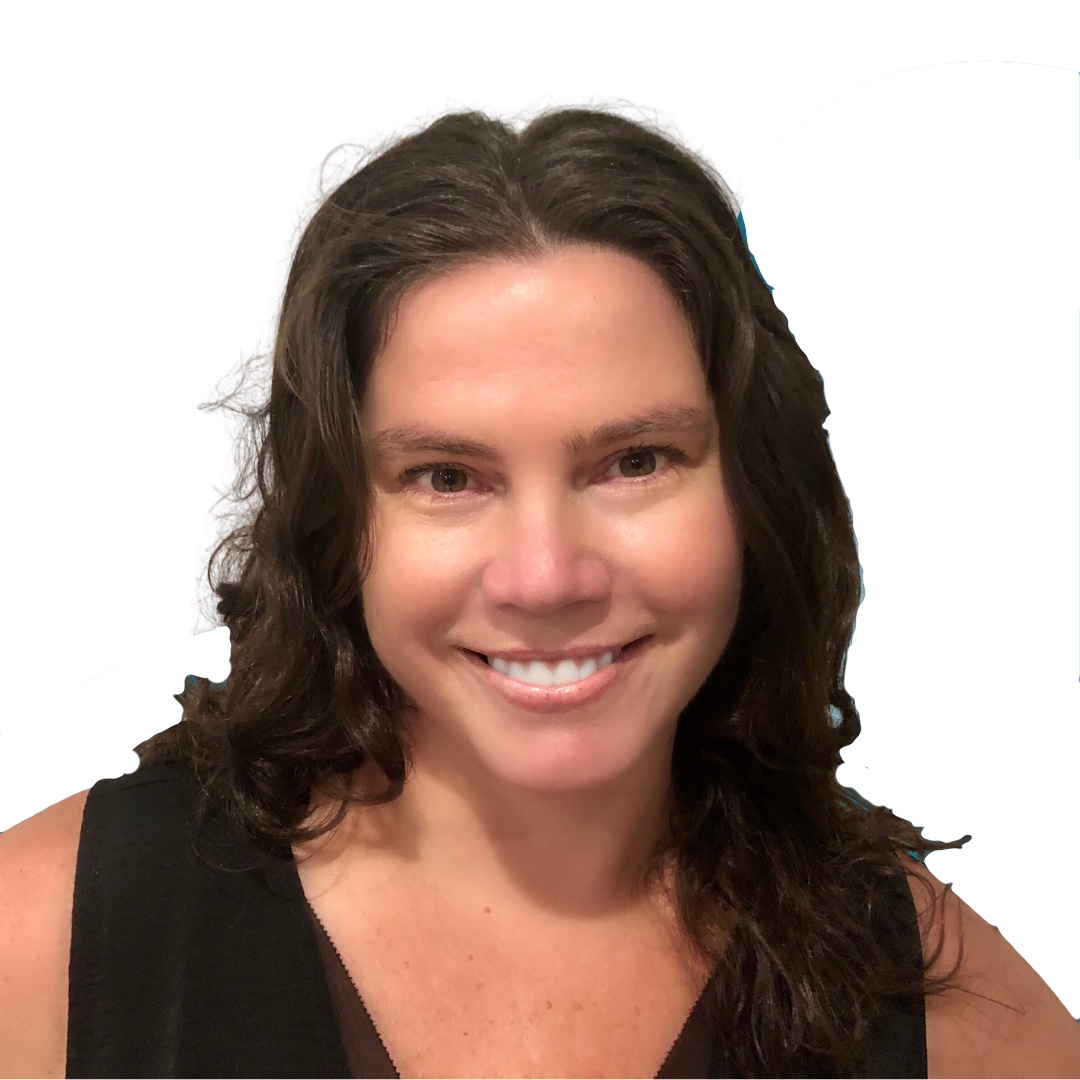
Founder, Perfect Little Business
Cindy Anne Molchany is the founder of Perfect Little Business. Since 2015, she has designed and built over 70 online programs for clients that have collectively generated more than $100 million in revenue. She helps established expert founders build intelligent, human-first businesses that attract ideal clients, command authority, and create leverage — without performing for algorithms or chasing endless scale.